From Laos to Philippines
When travelling from Laos to Philippines: Good news: all your Laos plug types fit in Philippines. Voltage matches at 230V. Frequency differs (50Hz → 60Hz). Modern phone and laptop chargers are usually fine, but some clocks, motors, and appliances may behave incorrectly.
 Laos
Laos Philippines
Your plugs

Type A
Fits
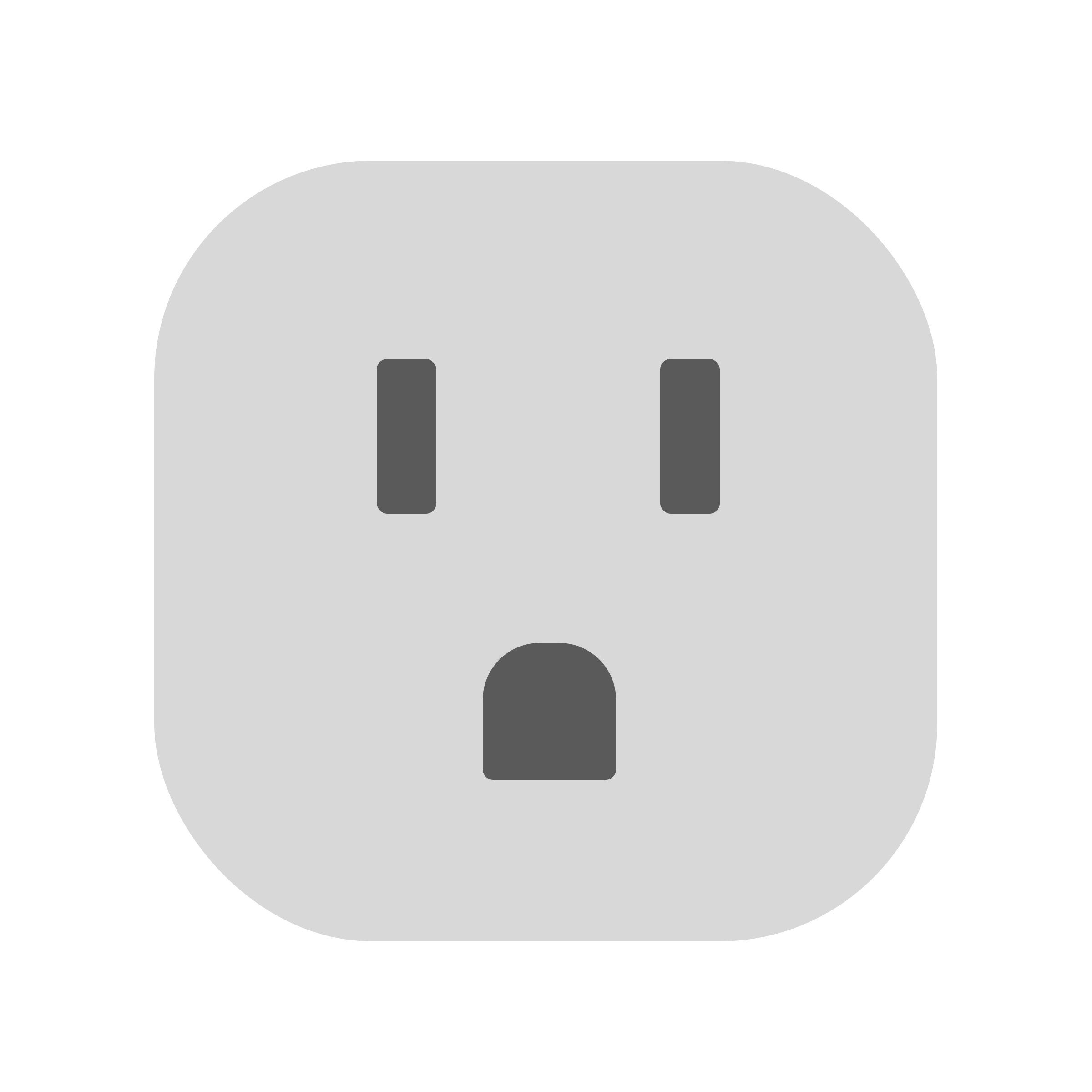
Type B
Fits

Type C
Fits
Accepted in Philippines
Type A
Type B
Type C
3 of 3 plug type(s) match
You: A, B, C • Philippines: A, B, C

Voltage: 230V → 230V
Same voltage

Frequency: 50Hz → 60Hz
Different frequency
Check device supports both 50/60 Hz.
 You may not need an adapter
Adapters you may need
Plugs, voltage and frequency line up for most chargers.
About electricity in Philippines
The Philippines runs on 220V/60Hz with Type A, B, and C sockets, an unusual pairing of European voltage with North American frequency.
Grid & history
The grid is segmented across the three major island groups (Luzon, Visayas, and Mindanao). Coal, natural gas, and geothermal (the world’s second-largest) make up most generation.
Availability
Supply is reliable in Metro Manila and Cebu. Brownouts persist in parts of Mindanao and during typhoon season nationwide.
Sockets & hotels
Hybrid sockets that accept both US flat pins (Types A and B) and European round pins (Type C) are common in modern buildings.
Energy mix
Geothermal is among the world’s largest.
Practical tips
- Most US and European plugs fit Philippine sockets directly.
- Voltage is 220V, so US-only appliances need a step-down converter.
- Frequency is 60Hz like North America, which means frequency-sensitive clocks and motors will run at their designed speed.
Frequently asked questions
- Will my Laos plug work in Philippines?
- Yes. Every Laos plug type (Type A, Type B, Type C) fits in Philippines sockets without an adapter.
- What plug type does Philippines use?
- Philippines uses Type A, Type B, Type C. The supply is 230V at 60Hz.
- Do I need a voltage converter for Philippines when travelling from Laos?
- Philippines runs on 230V, the same as Laos. Any charger that works at home will work there.
- Is the electrical frequency in Philippines the same as Laos?
- Frequency in Philippines is 60Hz, while Laos uses 50Hz. Modern phone and laptop chargers handle either, but clocks, motors, and some heating appliances may behave incorrectly.